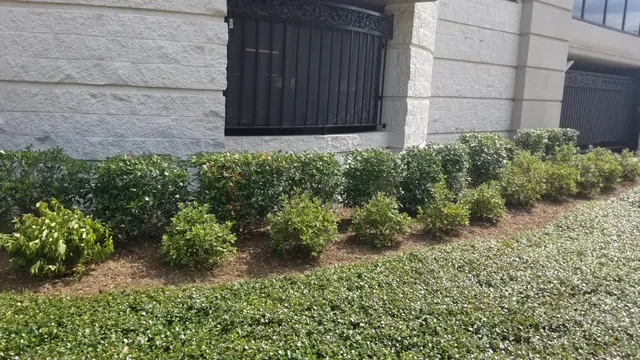
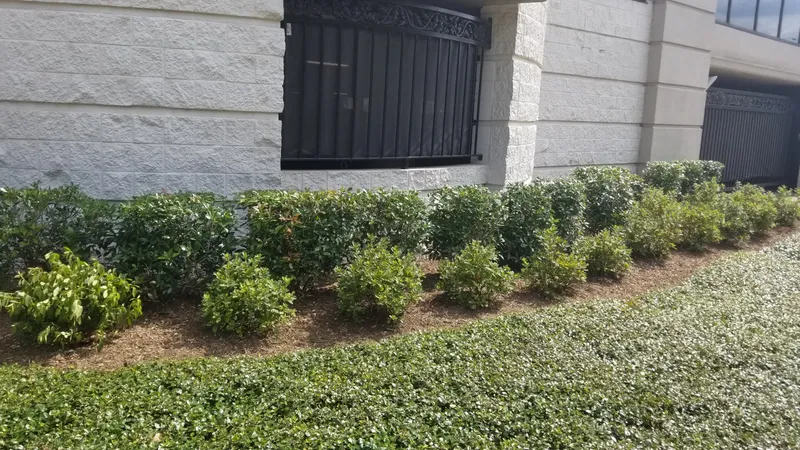
The installation is only the beginning. The landscape still has to be maintained after that. We take care of lawns, beds, palms, and irrigation on a schedule built around the Pinellas calendar: fast growth in the rainy summer, the June-to-September fertilizer ban, storm season, and the occasional winter cold snap.
What maintenance includes
- Mowing, edging, and blowing on a weekly or bi-weekly schedule, at the right height for your grass
- Shrub, hedge, and palm pruning on rotation
- Bed care: weeding, mulch or rock refresh, and seasonal color if you want it
- Irrigation checks: a zone-by-zone look at heads, coverage, run times, and the rain shutoff device
- Fertilization and weed control timed to the county ordinance
- Storm-season prep and cleanup
Every plan is itemized by task and frequency, so you know what happens on each visit.
Done right for Pinellas conditions
Mowing height and sandy soil. Lawns on fast-draining sand dry out fast. Cutting too short makes that worse. UF/IFAS recommends 3.5 to 4 inches for standard St. Augustinegrass, which shades the soil and supports deeper roots. We keep mower blades sharp to avoid shredded, browning tips.
The fertilizer ordinance. Pinellas County prohibits nitrogen and phosphorus on lawns and landscapes from June 1 through September 30. The ordinance also requires that granular nitrogen be at least 50% slow-release, that phosphorus be applied only when a soil test shows a deficiency, and that no fertilizer be applied within 10 feet of water bodies or seawalls. Fertilizer and grass clippings have to stay out of streets and storm drains. Commercial fertilizer applicators need state certification, which is worth asking any lawn company about. We schedule feeding for spring and fall and keep the summer program focused on mowing, irrigation, and weed and pest monitoring.
Watering rules. The Southwest Florida Water Management District (SWFWMD) sets the region’s watering limits and can tighten them in a drought. Pinellas is currently on one-day-a-week lawn watering, with restricted hours, under a water shortage order extended through March 31, 2027. Your watering day depends on your address and water source, so we check the current schedule from Pinellas County or your city utility and set the controller to match. Florida law also requires a working rain sensor or other shutoff device on automatic irrigation systems, so we test that device as part of every irrigation check. Our watering restrictions guide has more.
Storms and hurricanes. Before and during hurricane season, we remove dead fronds and weak limbs, clear drains and swales, and help you plan what to secure. Afterward, we clear debris and check irrigation for damage. Our hurricane season yard prep guide has the full checklist. Palms shouldn’t be over-pruned, though: UF/IFAS advises against removing healthy green fronds, which weakens the palm.
Plant health in heat and humidity. Summer humidity brings fungus and insect pressure. We watch for problems on each visit and recommend targeted treatment instead of blanket spraying. When a plant keeps failing in its spot, we suggest a Florida-friendly replacement that suits the spot better.
How it works
- Free on-site consultation. We walk the property, check irrigation, and talk about what you want handled.
- Plan and quote. You get an itemized plan with tasks and frequency.
- Ongoing service. Visits follow the plan, and we note anything that needs your attention.
- Seasonal adjustments. Mowing frequency, irrigation run times, and feeding change with the seasons and the rules.
If the landscape itself needs a reset first, start with landscape design.
Where we work
We’re based on Eastwood Drive in Clearwater and provide maintenance across our Pinellas County service area: Clearwater, Largo, and St. Petersburg.
Get a free quote or book a walkthrough to set up a plan.